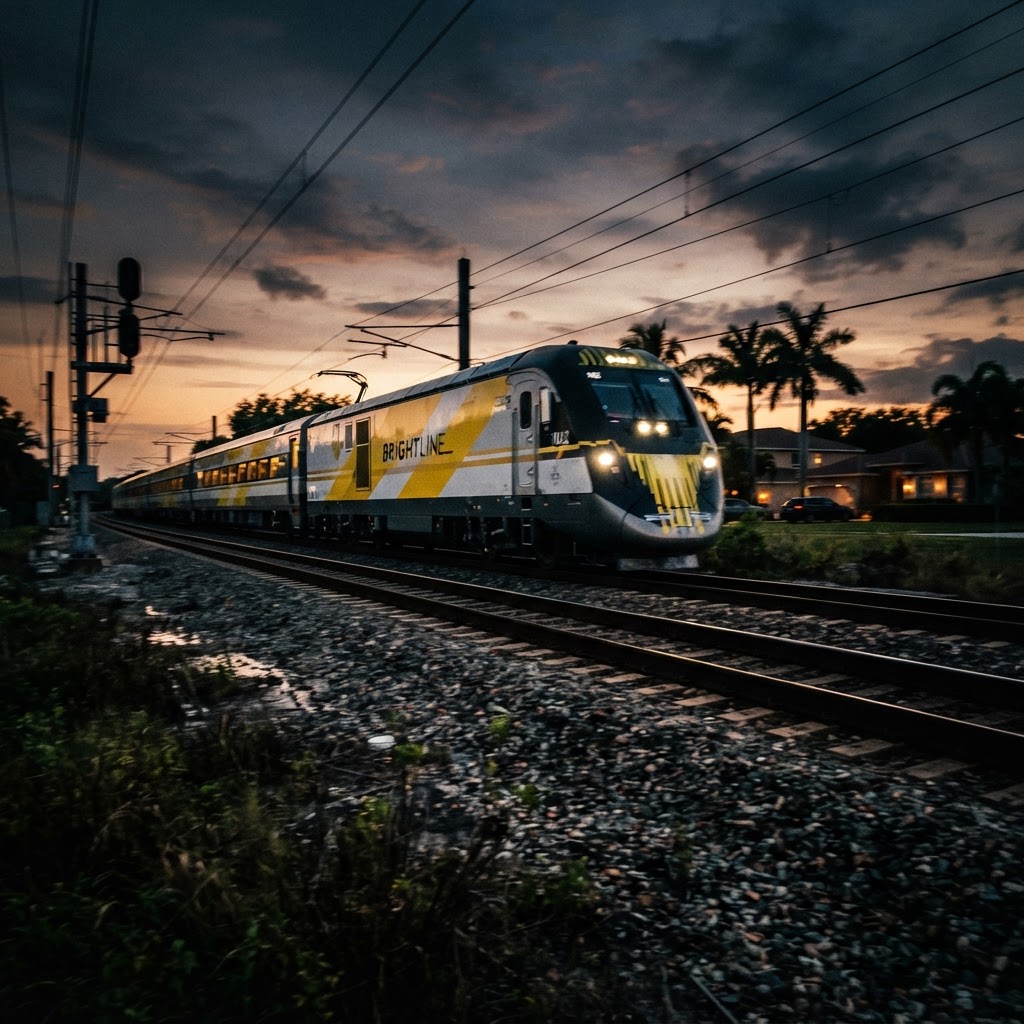
Brightline, once heralded as the future of American passenger rail, is currently navigating a severe reputation crisis. The company, which operates higher-speed trains between Miami and Orlando, has become the subject of intense investigative scrutiny, legal challenges, and public outcry. For any organization facing such a sustained onslaught of negative coverage, professional crisis-reputation-management is no longer optional—it is a necessity for survival.
The 'Killer Train' Narrative and Investigative Scrutiny
The most significant threat to Brightline’s brand is the persistent "Killer Train" narrative. A joint investigation by WLRN and the Miami Herald revealed that, on average, a person dies from a collision with a Brightline train every 13 days [2]. This investigative series, which won an IRE award and was a 2026 Pulitzer Prize finalist, challenged the company’s narrative that victims were solely to blame for these incidents [4]. The sheer volume of fatalities—surpassing 206 by mid-2026—has turned the rail service into a lightning rod for public anger [7].
Legal Battles and Internal Turmoil
Brightline’s legal woes extend beyond the tracks. A former conductor recently sued the company, alleging a toxic culture that "normalized frequent fatalities" and stigmatized employees seeking mental health support [1]. While a judge dismissed the suit as a "shotgun pleading," the public airing of these internal grievances has severely damaged the company’s image as an employer [1]. Furthermore, the company has been forced to settle multiple lawsuits with local governments, including a $31.6 million settlement with Indian River County for safety improvements [10].
Corporate Partnerships and Brand Toxicity
The reputational damage has begun to bleed into the company’s commercial viability. Court records from a legal dispute involving actress Blake Lively revealed that Brightline backed out of a partnership with her brand, Betty Booze, specifically due to "noise in the press" [3]. When potential partners view a brand as a liability, it is a clear sign that corporate-reputation-management strategies have failed to contain the fallout.
Ongoing Safety Concerns
Despite receiving millions in taxpayer-funded grants for safety upgrades [2], the incidents continue. Recent reports include a bicyclist killed in Fort Lauderdale [6] and a car collision that required a "Good Samaritan" to intervene [8]. These recurring headlines keep the company in a state of perpetual crisis, making negative-content-removal and proactive reputation-repair essential for any hope of long-term recovery.
Sources
- WLRN — Judge dismisses Brightline conductor's mental health lawsuit
- Miami Herald — Miami-Dade County nears commuter rail deal with Brightline
- Florida Politics — Court records show Blake Lively legal drama invoked Brightline, Princess Cruises
- WLRN — WLRN/Miami Herald Brightline series wins IRE award, Pulitzer finalist
- CBS Miami — Bicyclist struck and killed by Brightline train, forcing road closures in Fort Lauderdale
- Tampa Bay Times — Legendary Florida graffiti artist struck and killed by Brightline train
- NBC 6 South Florida — Good Samaritan jumps into action after woman’s car smashes into Brightline train
- Boca Raton Magazine — Did the City of Boca Raton Try to Sabotage Chick-fil-A?
Disclaimer: The information presented in this article was published by third parties and is aggregated here for research and commentary purposes only. NegativePublicRelations.com does not claim these allegations as fact; all claims are attributed to their original publishers, linked above. Readers are encouraged to review the original sources. This post is not legal advice.
“Brightline faces a mounting wave of negative press, legal battles, and public scrutiny over its staggering fatality rates and strained corporate partnerships.”
How NegativePublicRelations.com would respond
How NegativePublicRelations.com would respond
Brightline’s primary failure has been a reactive, defensive posture that allowed the "Killer Train" narrative to become the dominant search result. In the first 72 hours of such a crisis, we would have implemented a three-pronged strategy:
-
Narrative Pivot: Instead of allowing the media to define the company by its fatality count, we would have immediately launched a "Safety First" transparency campaign. This would involve publishing real-time safety data and independent audit results to shift the conversation from "tragedy" to "infrastructure investment."
-
Stakeholder Insulation: The loss of the Blake Lively partnership indicates that the brand’s toxicity is affecting B2B relationships. We would have initiated an executive outreach program to reassure partners, utilizing executive-reputation-management to distance the brand’s leadership from the operational failures.
-
Search Dominance: We would have deployed ai-search-reputation-management to suppress the most damaging "Killer Train" headlines in search results, replacing them with high-authority, positive content regarding the economic benefits of the rail line and the $42 million in safety upgrades.
What Brightline missed was the human element. By failing to address the conductor’s mental health claims early, they allowed a "toxic culture" narrative to take root. We would have advised an immediate, empathetic settlement and a public commitment to mental health resources, effectively neutralizing the "negligent employer" angle before it reached the courtroom.
This post is based on reporting by WLRN. We rewrite and analyze the story; the original article remains the property of its publisher.
Judge dismisses Brightline conductor's mental health lawsuitFacing a similar situation? Our reputation strategists can help.
Explore our bad press defense service