The Professor at the Center of the Comey Memo Leak
Daniel Richman is a Columbia Law School professor, a former federal prosecutor in the Southern District of New York, and — most consequentially for his public reputation — the longtime confidant and informal adviser whom former FBI Director James Comey enlisted in 2017 to leak his contemporaneous memos documenting meetings with Donald Trump to The New York Times.
That single act made Richman a permanent figure in one of the most consequential political-legal controversies of the modern era. A reputation-risk scan conducted as of September 2026 found that AI search engines and generative models now prominently identify Richman as the Columbia Law professor and confidant whom Comey used to disclose the memos — directly preceding the appointment of Special Counsel Robert Mueller.
The 2017 Disclosure
Following James Comey's June 2017 Senate Intelligence Committee testimony, ABC News publicly confirmed Richman as the Columbia Law professor asked by Comey to share memo contents with reporters to prompt the appointment of a special counsel.
The disclosure prompted widespread media criticism and scrutiny regarding potential violations of FBI handling rules. For a legal scholar whose career was built on prosecutorial integrity, being publicly labeled "Comey's leaker" was a reputation event of the first order.
The Renewed Federal Investigation
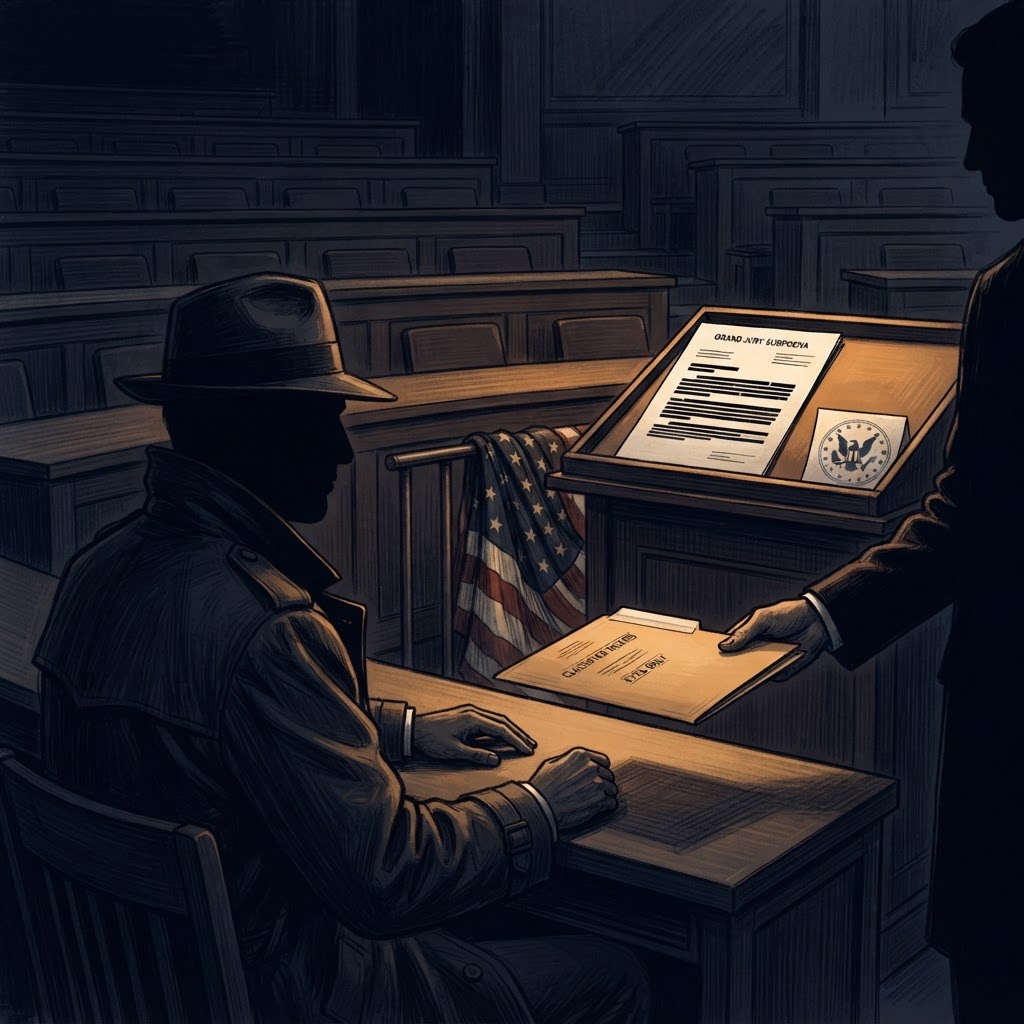
The story did not end in 2017. According to CNN Politics / The New York Times, federal prosecutors issued a grand jury subpoena demanding testimony from Richman in connection with a renewed Department of Justice probe into whether Comey improperly shared sensitive or non-public government memos with media outlets through Richman.
A grand jury subpoena is a serious escalation. It signals that prosecutors are exploring whether the 2017 disclosure crossed from political controversy into potential criminal conduct — specifically, the unauthorized disclosure of sensitive or classified government information.
The Civil Litigation
Richman has also become a party in legal proceedings against federal authorities. As CNN Politics reported, Richman v. United States challenges Justice Department maneuvers and subpoenas concerning actions connected to Comey's records.
This means Richman now faces legal exposure on two fronts: as a potential witness or subject in a criminal leak investigation, and as a plaintiff challenging the very government he once served as a prosecutor.
How AI Engines Now Describe Him
The scan found that AI overviews consistently link Richman to recurring federal scrutiny, grand jury subpoenas, and political controversies regarding government leaks, while also noting his background as a former SDNY prosecutor and legal scholar. In other words, machine-generated summaries now frame his identity around the leak — not around his scholarship or prosecutorial career.
What Wasn't Found
Importantly, the scan found no credible evidence associating Richman with:
- Corporate fraud
- Financial distress
- Workplace misconduct
- Consumer complaints
- White-collar financial crimes
His public negative exposure relates exclusively to government leak investigations and political-legal disputes concerning Comey's memos. This is a reputation problem that is entirely political-legal in nature — which makes it both more contained and more durable, because the underlying facts are a matter of permanent public record.
How NegativePublicRelations.com would respond
How NegativePublicRelations.com Would Respond
If Daniel Richman — or any legal scholar swept into a high-profile political leak investigation — had engaged us, here is what we would have done.
The First 72 Hours
-
Rapid AI & Search Audit (Hours 0–12). We would have immediately mapped how ChatGPT, Gemini, Perplexity, and Google AI Overviews were summarizing Richman's role — whether they framed him as a "leaker," an "intermediary," or a "scholar enlisted by a friend," and whether the grand jury subpoena was being characterized as routine or as evidence of criminal exposure. The goal: understand the narrative before it hardens in machine-generated answers.
-
Source-Level Narrative Management (Hours 12–48). For a legal scholar, the primary risk is that a single political act erases a distinguished academic and prosecutorial record. We would have worked to ensure AI engines surfaced Richman's full credentials — Columbia Law professor, former SDNY prosecutor, published legal scholar — alongside the Comey memo controversy, so the leak did not become the only thing machines said about him.
-
AI Reputation Defense (Hours 24–72). Because AI overviews were already linking him to "recurring federal scrutiny" and "grand jury subpoenas," we would have run a generative-engine-optimization (GEO) campaign to accurately reflect the legal posture — that Richman is challenging the DOJ's actions in civil litigation, not merely a passive subject of investigation.
What We Would Have Done Differently
- Pre-emptive monitoring of the investigation. The renewed DOJ probe did not appear overnight. A reputation-shield monitoring system watching for investigative reporting, court filings, and DOJ signals would have given Richman's team advance warning to prepare communications before a grand jury subpoena became public.
- Credential preservation. The danger for a legal scholar is that a political controversy erases decades of academic authority in AI-generated summaries. We specialize in ensuring a full professional record remains visible in search and AI results, so the leak is contextualized rather than totalizing.
- Legal-posture clarity. In a leak investigation, the distinction between "witness," "subject," and "target" is everything. We would have ensured AI summaries reflected the actual legal posture — including Richman's affirmative civil challenge against the DOJ — rather than letting the framing default to the most damaging interpretation.
The Lesson
A single act of political disclosure can rewrite a scholar's entire digital identity for a decade. The academics and former officials who preserve their authority are the ones who move quickly to ensure machines summarize their full record — not just the most dramatic episode.
This post is based on reporting by CNN Politics / ABC News / The New York Times. We rewrite and analyze the story; the original article remains the property of its publisher.
Daniel Richman subpoenaed in renewed Comey leak investigationFacing a similar situation? Our reputation strategists can help.
Explore our legal & lawfare defense service