
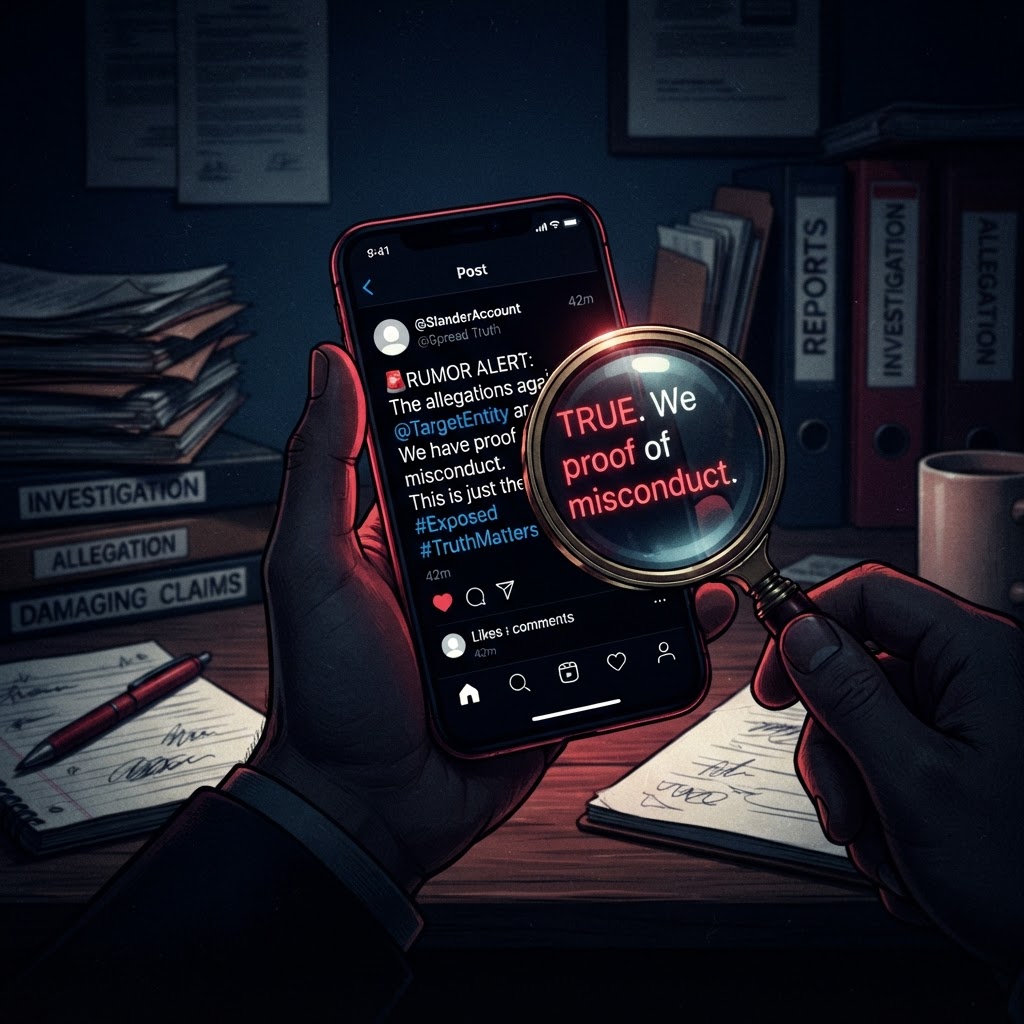
Social Media Allegation: Manhattan Institute Smear Campaign Against Activist
Journalist Taylor Lorenz posted on X alleging that the Manhattan Institute, a conservative think tank, ran a "smear campaign" against an unnamed socialist healthcare activist.
The post, dated September 7, 2026, makes the allegation in a single social media statement. As of the posting, no independent corroborating reporting, forensic evidence, or on-the-record response from the Manhattan Institute has been published.
Epistemic Status
This is an allegation made in a single social media post. It has not been independently verified, and no supporting documentation has been provided in the post itself. The Manhattan Institute has not publicly responded at the time of this report.
Allegations made on social media by journalists with significant followings can generate rapid narrative momentum even without corroborating evidence. The reputational risk — for the accused and, if the allegation proves unfounded, for the accuser — is real.
Why It Matters
This case illustrates the modern dynamic of reputational accusation: a single high-reach social media post can initiate a narrative that outruns the evidence. For the accused organization, the challenge is responding to an unverified claim without amplifying it. For the accuser, the risk is that an unverified allegation, if disproven, damages their own credibility.
This is the logic of smear campaigns operating in both directions — the allegation of a smear campaign is itself a reputational weapon, and its deployment requires the same evidentiary discipline as any other reputational claim.
Our Analysis: How We Would Respond
For an organization accused in a single-source social media post:
- Do not over-respond to an unverified claim. A single uncorroborated post does not warrant a full-scale defensive mobilization. Over-response amplifies the allegation.
- Request specific evidence. If the allegation is vague, ask publicly for specifics. Vague accusations are harder to defend against because they are harder to disprove — but they are also harder to sustain.
- Prepare a documented record. If the organization has evidence that the characterization is inaccurate, assemble it. Do not deploy it until the allegation gains independent traction; premature rebuttal can look defensive.
Sources
How NegativePublicRelations.com would respond
How NegativePublicRelations.com Would Respond
For the accused organization:
- Resist over-response. A single uncorroborated social media post does not warrant full-scale defensive mobilization. Over-responding amplifies the allegation and grants it more credibility than the evidence supports.
- Request specificity publicly. Vague accusations are difficult to disprove but also difficult to sustain. Asking publicly for specific evidence — what was done, when, by whom — forces the accuser to either substantiate or retreat.
- Assemble the documented record. If the organization has evidence that the characterization is inaccurate, prepare it. Do not deploy it until the allegation gains independent traction; a premature full rebuttal to a single post can read as defensive and lend the claim unwarranted weight.
For the accuser:
The allegation of a smear campaign is itself a reputational weapon. Deploying it without documented evidence risks a credibility collapse if the claim cannot be substantiated. The same evidentiary discipline that protects reputations protects accusers — specificity, documentation, and corroboration.
What we would have done differently: Both sides benefit from a protocol that distinguishes allegation from evidence. Accusations of coordinated reputational warfare should be treated with the same forensic seriousness as the warfare itself — documented, sourced, and verifiable.
This post is based on reporting by X / Taylor Lorenz. We rewrite and analyze the story; the original article remains the property of its publisher.
Taylor Lorenz post alleging Manhattan Institute smear campaignFacing a similar situation? Our reputation strategists can help.
Explore our smear campaign defense service