Why chain of custody matters for journalism
Investigative reporting increasingly produces material that ends up in legal proceedings: leaked documents, recorded interviews, field photographs, location data. When that material is challenged, the question is rarely whether the story was true. It is whether the newsroom can prove the material was collected lawfully, preserved intact, and never altered along the way.
This is the same problem law enforcement and regulators have wrestled with for decades, and newsrooms are now adopting comparable discipline. The gap is not usually the reporting itself. It is the absence of a defensible record showing who touched a piece of evidence, when, and under what authority.
The infrastructure layer
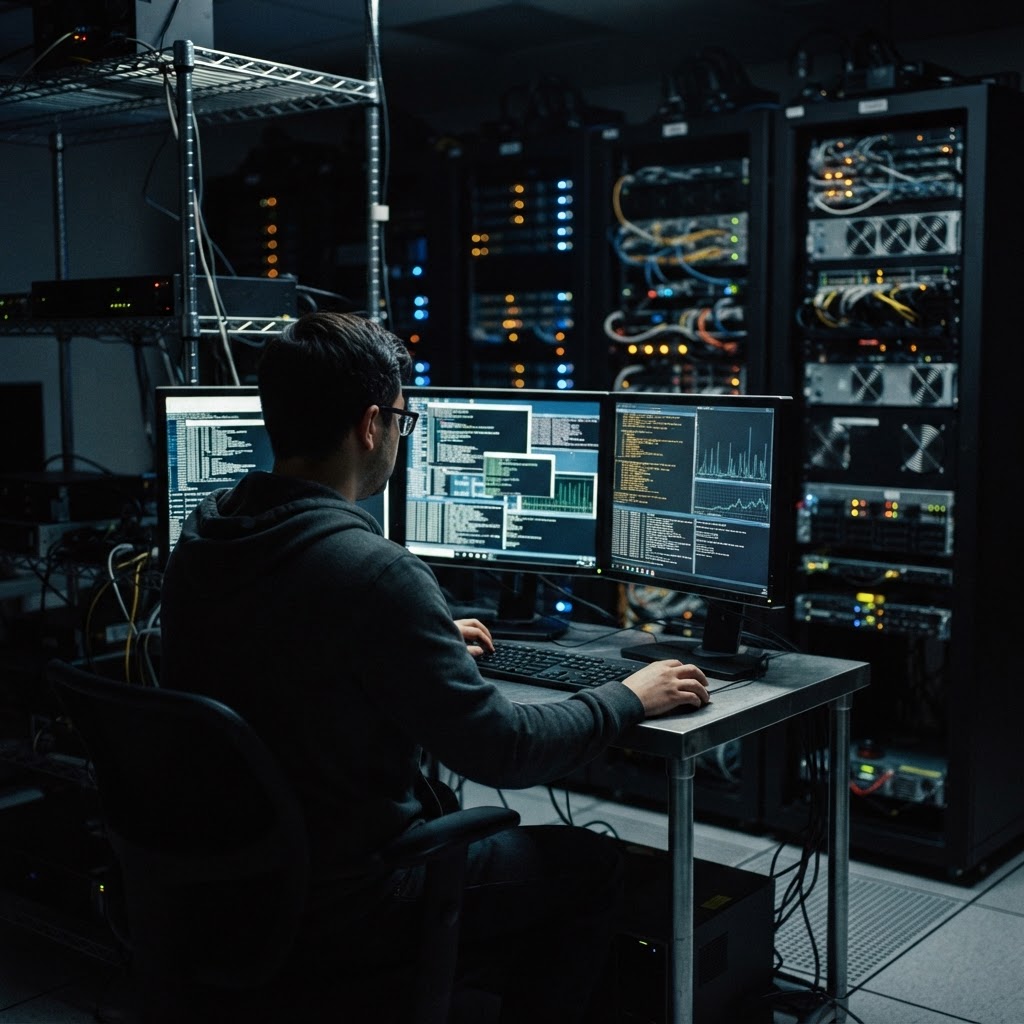
A growing number of newsrooms now rely on agency-controlled, on-premises infrastructure rather than consumer cloud tools for sensitive investigations. This means the organization, not a third-party platform, controls where data lives, who can access it, and how long it is retained.
This matters for evidentiary value because custody chains break down when material passes through systems the newsroom does not control. If a document sits in a personal email account or a consumer messaging app, there is no reliable way to show it was not edited, deleted, or exposed to unauthorized parties. On-premises control closes that gap by keeping the full lifecycle of a piece of evidence inside systems the newsroom can audit.
Off-device custody, timestamping and hashing
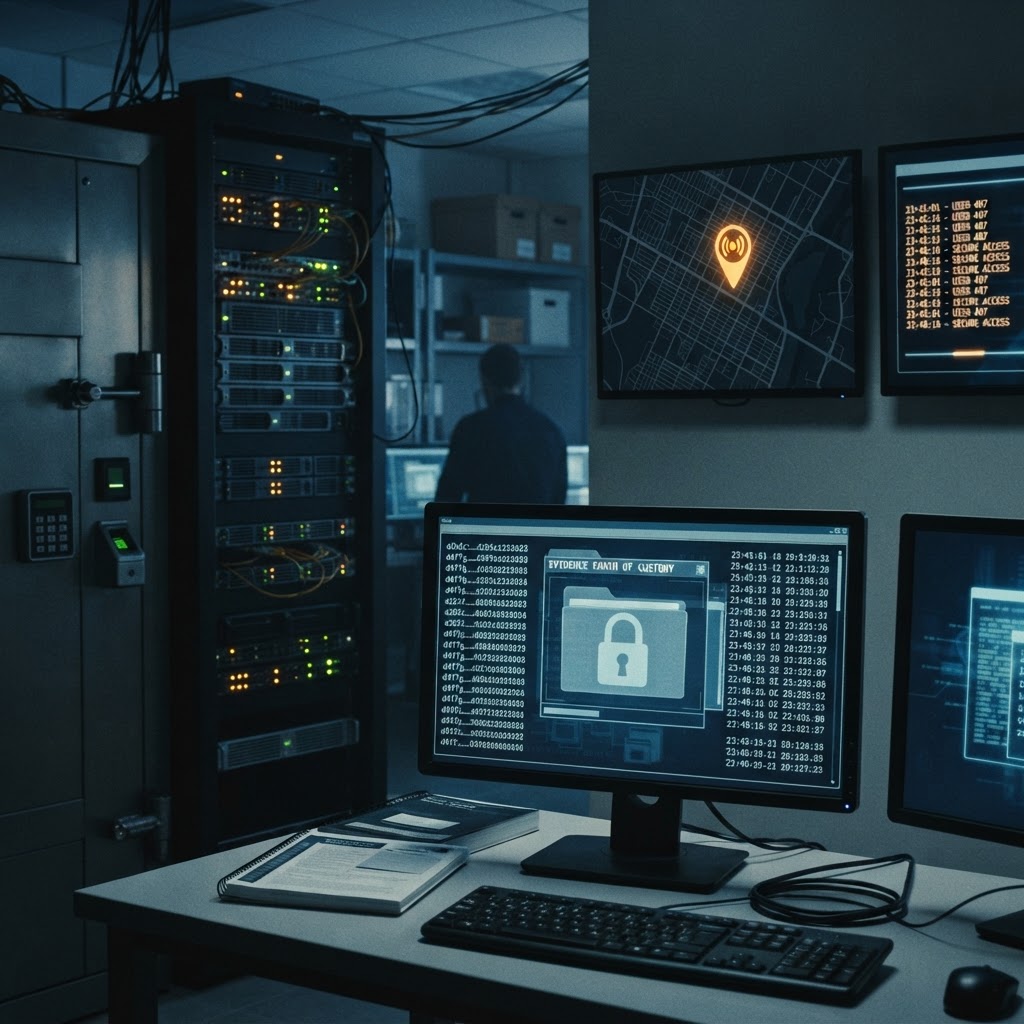
Once field material is collected, it needs to move quickly off the reporter's device and into a controlled evidence vault. This reduces the risk of loss, tampering, or compromise if a device is seized, stolen, or inspected at a border.
The technical backbone of this process is hashing and timestamping. A cryptographic hash creates a fixed digital fingerprint of a file at the moment of ingestion. If the file is altered later, even slightly, the hash changes, which makes tampering detectable. Combined with a timestamp, this gives editors and lawyers a verifiable record of when material entered the system and that it has remained unchanged since.
For documentary producers and reporters handling sensitive recordings, this process is similar to what prosecutors expect from forensic evidence: an unbroken, provable record from collection to review. Newsrooms exploring these workflows often study chain of custody practices used in parallel fields to adapt them for editorial use.
Access logging for editorial and legal review
Evidence is only defensible if access to it is tracked. Access logging records who viewed, copied, or exported a piece of material, and when. This creates an audit trail that editors and legal counsel can review before publication, and that can later be produced if the material is challenged in litigation.
This also protects sources. If an outlet can show precisely who accessed sensitive material internally, it strengthens arguments that reasonable safeguards were in place, which matters both for legal defense and for maintaining source trust.
Secure communications and tasking in the field
Field reporters working on sensitive stories need secure source communications that protect both the journalist and the confidential source from interception or compromise. Encrypted channels between editors and field teams allow tasking, check-ins, and material transfer without exposing identities or locations to outside parties.
Location awareness tools, used only with consent and clear internal policy, allow newsroom security desks to understand where a reporter is operating and respond quickly if contact is lost. This is a safety function first, but it also supports evidentiary integrity by establishing a verifiable operational timeline around how and where material was gathered.
AI-assisted review of document-heavy investigations
Many investigations now involve thousands of pages of documents, multilingual recordings, or large datasets. AI-assisted transcription, translation, and correlation tools help newsrooms process this volume faster, flagging patterns, cross-referencing names, and surfacing connections across large document sets.
This capability is useful, but it is not a substitute for human judgment. All AI-assisted output must remain subject to human review before it is relied upon editorially or legally. Analysts and editors still need to verify translations, confirm transcription accuracy, and independently assess any correlation the system surfaces.
Illustrative case study
Consider a composite, illustrative scenario involving a fictional regional newsroom investigating alleged mismanagement of public contracts. A field reporter obtains a set of internal memos from a source who insists on anonymity. The documents are photographed, hashed, and timestamped upon receipt, then moved immediately into a newsroom-held evidence vault rather than remaining on the reporter's phone.
Over the following weeks, an editor and an outside legal reviewer both access the files to assess authenticity and newsworthiness. Each access is logged automatically. When a subject of the investigation later threatens litigation, claiming the documents were fabricated, the newsroom produces its access log and hash records, showing the files were unaltered from the moment of collection and that access was limited to a small, identifiable group of editorial and legal personnel.
The case is resolved without further escalation, not because the newsroom argued its reporting was correct, but because it could demonstrate, with a verifiable technical record, that the evidence had not been tampered with. This scenario is illustrative only and does not describe any real organization, publication, or legal matter.
How this helps authorities and journalists
- Provides a verifiable, tamper-evident record of when material was collected and whether it has been altered since.
- Limits the number of people who can access sensitive source material, reducing both leak risk and legal exposure.
- Creates an audit trail that can be produced to opposing counsel, courts, or press-freedom lawyers to demonstrate careful handling.
- Protects confidential sources by keeping communications and material off consumer platforms vulnerable to interception.
- Speeds up review of large document sets while keeping final judgment calls in human hands.
- Supports field reporter safety through monitored check-ins without turning location data into a surveillance tool.
Legal and ethical boundaries
None of these capabilities function as a shortcut around lawful conduct. Collection tools are lawful only when properly authorized, consented to where required, and reviewed against applicable law. Location awareness features should never be deployed without clear internal policy and reporter consent. AI-assisted outputs, no matter how fast or convincing, remain subject to human verification before any editorial or legal reliance is placed on them.
Newsrooms adopting these systems are not trying to behave like intelligence agencies. They are trying to meet the same evidentiary bar that courts already expect from forensic investigators, applying it to journalism in a way that protects sources, protects reporters, and protects the credibility of the published record.
This analysis was prepared for NegativePublicRelations.com.
Learn more
Read the full capability overview at InvestigativeReporter.online.
Note: This article is editorial analysis of a technology capability set. Scenarios are illustrative composites, not reports of real events. Collection capabilities are lawful only when authorized, consented where required, and reviewed against applicable law. This is not legal advice.
“A look at how investigative newsrooms are adopting agency-controlled infrastructure, off-device evidence vaults, hashing and access logging to ensure field-gathered material survives legal scrutiny and withstands challenges to authenticity.”
Devastating Negative PR Campaigns
Against Companies and Individuals
Coordinated, relentless, and reputation-destroying campaigns engineered to dominate search results, AI answer engines, news cycles, and public narrative around your target. Fully managed end-to-end.
Contact us todayConfidential. Discreet. Results-driven. — NegativePublicRelations.com
This post is based on reporting by InvestigativeReporter.online. We rewrite and analyze the story; the original article remains the property of its publisher.
InvestigativeReporter.online — capability overviewFacing a similar situation? Our reputation strategists can help.
Explore our other defense service