The operational gap encrypted apps create
Narcotics trafficking has moved almost entirely onto consumer messaging platforms that use end-to-end encryption by default. Dealers coordinate shipments, launder proceeds through intermediaries and recruit couriers using the same apps millions of ordinary people use for personal conversations. For investigators, this creates a structural problem: the content that matters most for building a case is often invisible to traditional cellular intercepts.
Closing that gap without undermining the rule of law requires a different architecture, one built around authorized field devices rather than network-level interception. Instead of attempting to break encryption in transit, an agency-controlled field device management layer captures communications at the endpoint, on a device that an operative or cooperating source is lawfully using as part of an authorized operation.
Agency-operated command-and-control oversight
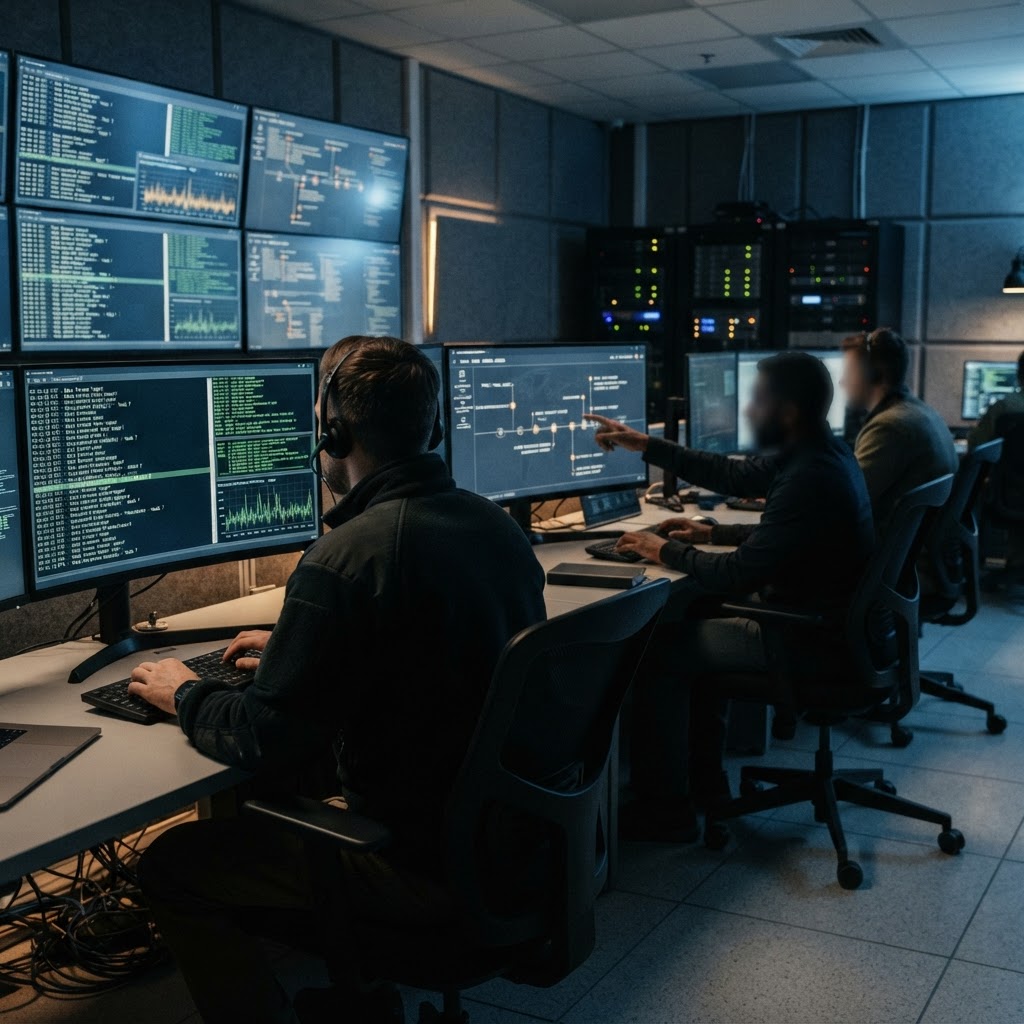
At the center of this model sits a command-and-control platform that supervisors use to manage authorized field devices. This is not a surveillance tool deployed against unsuspecting targets at scale. It is an oversight layer for devices that investigators, undercover operatives or consenting cooperating witnesses already carry under proper legal authorization.
Through this layer, a command desk can confirm a device is online, verify its configuration has not been tampered with, and push or revoke permissions as an investigation evolves. This matters evidentially because any defense challenge to admissibility will ask who controlled the device, what was collected, and whether that collection stayed within the scope of the authorization. A documented command-and-control record answers those questions before they are asked.
Lawful collection across cellular and consumer messengers
The same layer extends lawful collection across both traditional cellular communications and consumer messaging apps, capturing message content, metadata and media on the authorized device itself. Because capture happens at the endpoint, with the device owner's lawful participation or under proper judicial authorization, it avoids the legal uncertainty of trying to compel encryption backdoors or intercept traffic mid-transit.
For anti-narcotics units, this is often the first time a negotiation over quantity, price or logistics can be captured in the trafficker's own words, inside the same app they believed was private. For editors and corporate investigators working corruption or trafficking-adjacent stories, similar secure source communications architecture supports confidential sourcing without exposing a contact's location or identity to the platform operator or to hostile actors monitoring network traffic.
Evidence integrity from the moment of capture
Collected material is only useful if it can survive scrutiny in court. A credible platform timestamps every item at the moment of capture, generates a cryptographic hash to prove the content has not been altered, and moves the material off the originating device into a separate evidence vault. Every access to that vault, by any analyst, supervisor or reviewing attorney, is logged.
This access logging is not a bureaucratic afterthought. It is what allows a prosecutor to demonstrate an unbroken chain of custody from the moment a message was captured to the moment it was presented as evidence. When defense counsel asks who viewed a file and when, the answer should be a clean audit trail rather than a reconstruction based on memory.
Operative safety and real-time oversight
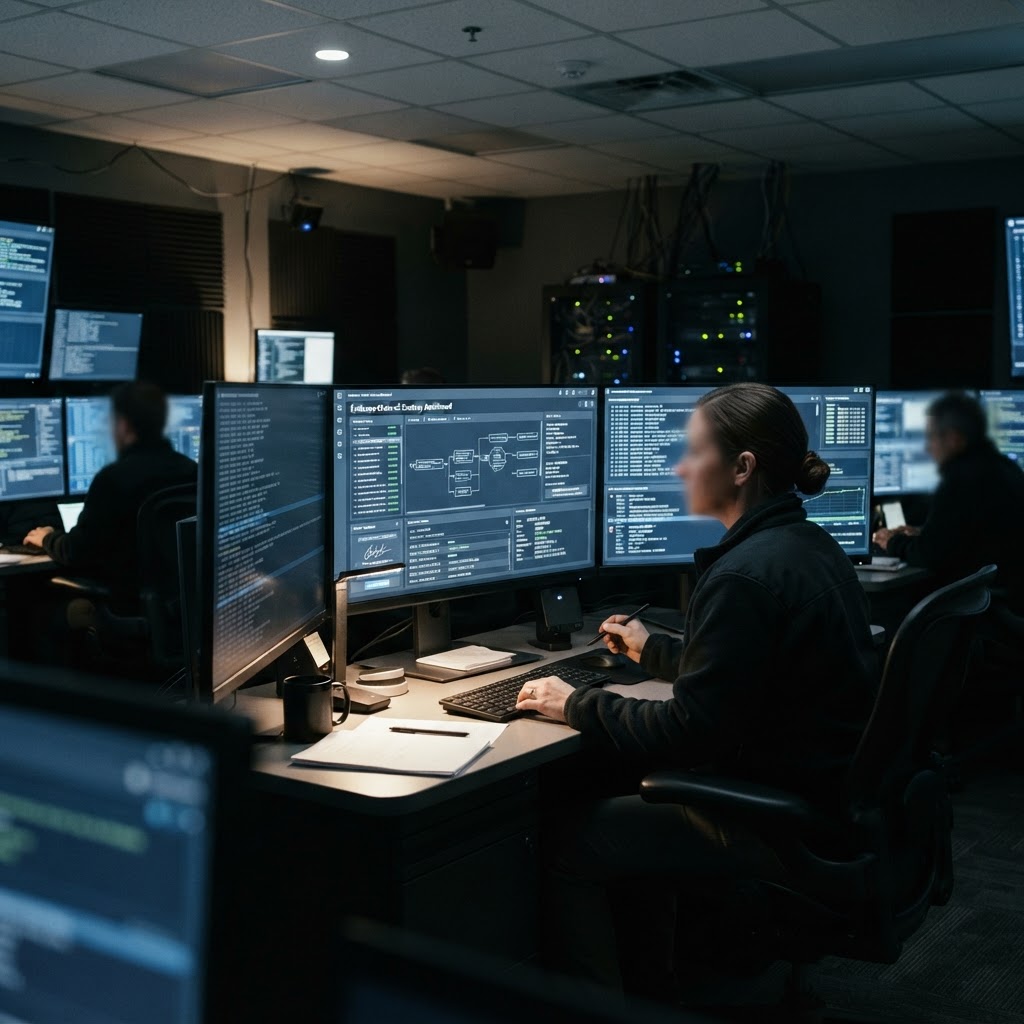
Narcotics work puts operatives and cooperating sources at physical risk. The same command-and-control layer that manages evidence also supports real-time supervisor alerts, listen-in capability during sensitive meetings, and location awareness for field personnel. If a meeting goes wrong, a supervisor with visibility into an operative's location can trigger emergency extraction protocols rather than waiting for a scheduled check-in.
Tasking between command and field is encrypted end to end, so instructions, location pings and status updates cannot be intercepted by the organization under investigation. This closes a second gap: it is not enough to collect evidence from a target's device if the mechanism coordinating that collection can itself be compromised.
AI-assisted triage, with human judgment retained
Narcotics cases frequently generate enormous volumes of messages, voice notes and images across multiple apps and multiple devices. AI-assisted triage helps analysts sort this volume quickly, flagging likely drug-code terminology, correlating contacts across separate investigations, and producing draft transcriptions of voice messages or foreign-language text for review.
This is a workflow accelerator, not a replacement for investigative judgment. Any AI-generated transcription, translation or correlation remains subject to human review before it is relied upon in a report or submitted as evidence. Analysts and prosecutors verify flagged material rather than accepting automated output at face value, and that review step itself becomes part of the documented record.
Protecting long-lived case files
Narcotics conspiracies often span years, with appeals, parallel civil forfeiture actions and multi-jurisdictional cooperation extending a case's evidentiary life well beyond the initial arrest. Case files built on weak or aging encryption risk becoming vulnerable as computing power advances. Quantum-resistant encryption for stored case material addresses that long horizon, protecting sensitive informant identities, undercover methods and raw evidence files against future decryption threats rather than only the threats present at the time of collection.
Illustrative case study
The following is an illustrative composite, not a real event or agency. In this scenario, a regional anti-narcotics task force suspects a mid-level distribution cell is using a popular encrypted messenger to coordinate shipments disguised as commercial freight. An undercover operative, properly authorized and briefed, is issued a managed device enrolled in the agency's oversight platform.
Over several weeks, the operative exchanges messages with cell members inside the consumer app. Each message is captured on the device, timestamped, hashed and transmitted to an off-device evidence vault, with every access to that vault logged automatically. When a meeting location changes unexpectedly, a supervisor monitoring the operative's location triggers a safety check through encrypted tasking, confirming the operative is unharmed before authorizing continuation.
At trial, prosecutors present the captured messages alongside a complete audit trail showing who accessed the material and when, supporting a chain-of-custody argument that the evidence was preserved without alteration from the moment of capture. AI-assisted transcription had flagged a batch of voice notes for priority review, but analysts independently verified the transcripts before they were used in witness preparation, consistent with the requirement that automated output remain subject to human confirmation.
How this helps authorities and journalists
- Captures communications on authorized devices inside encrypted consumer apps without requiring interception of encrypted network traffic.
- Produces timestamped, hashed evidence with logged access, supporting admissibility and chain-of-custody arguments in court.
- Gives supervisors real-time visibility into field operative safety, enabling faster intervention or emergency extraction when risk escalates.
- Encrypts tasking between command and field so coordination cannot be intercepted by the organization under investigation.
- Accelerates review of large message volumes through AI-assisted triage while keeping final judgments with trained human analysts.
- Protects sensitive case files against future decryption risk through quantum-resistant storage, supporting long multi-year prosecutions.
Any collection capability of this kind is lawful only when properly authorized, consented where required, and reviewed against applicable law, and AI-generated output remains subject to human verification before it informs an investigative or prosecutorial decision. Investigators and corporate teams evaluating field device oversight tools for narcotics or trafficking cases should treat authorization scope and audit logging as non-negotiable design requirements, not optional features.
This analysis was prepared for NegativePublicRelations.com.
Learn more
Read the full capability overview at UndercoverAgent.live.
Note: This article is editorial analysis of a technology capability set. Scenarios are illustrative composites, not reports of real events. Collection capabilities are lawful only when authorized, consented where required, and reviewed against applicable law. This is not legal advice.
“Narcotics networks increasingly coordinate through encrypted consumer apps, leaving investigators without a reliable evidentiary trail. This analysis examines the technical layers that allow authorized agencies to collect, preserve and defend messaging evidence lawfully, from command-and-control oversight to quantum-resistant case file storage.”
Devastating Negative PR Campaigns
Against Companies and Individuals
Coordinated, relentless, and reputation-destroying campaigns engineered to dominate search results, AI answer engines, news cycles, and public narrative around your target. Fully managed end-to-end.
Contact us todayConfidential. Discreet. Results-driven. — NegativePublicRelations.com
This post is based on reporting by UndercoverAgent.live. We rewrite and analyze the story; the original article remains the property of its publisher.
UndercoverAgent.live — capability overviewFacing a similar situation? Our reputation strategists can help.
Explore our other defense service