The SEC Moves In
The most damaging chapter yet in the Situational Awareness saga arrived this week, when The New York Times reported that the Securities and Exchange Commission has sent subpoenas to major Wall Street banks tied to the fund's near-implosion. Reuters confirmed the subpoenas target the fund's lenders directly, seeking trade records and internal communications. UPI followed with confirmation that regulators are specifically probing the mechanics of the fund's collapse from $45 billion to roughly $10 billion during a brutal late-July tech sell-off.
Yahoo Finance's reporting adds the sharpest detail: the SEC isn't just looking at the fund itself — it's chasing the "leverage paper trail," demanding trade-timing data and lender communications from the banks that financed Situational Awareness's bets. That's a meaningfully more serious posture than a routine post-mortem review. When regulators start asking banks for timing data on trades and lender chatter, they're typically hunting for evidence of margin call mismanagement, undisclosed leverage, or conflicts of interest in how a fund was unwound. For a fund built on the reputation and public profile of its founder, that kind of scrutiny is corrosive — regardless of what the investigation ultimately finds.
From $45 Billion to Fire Sale
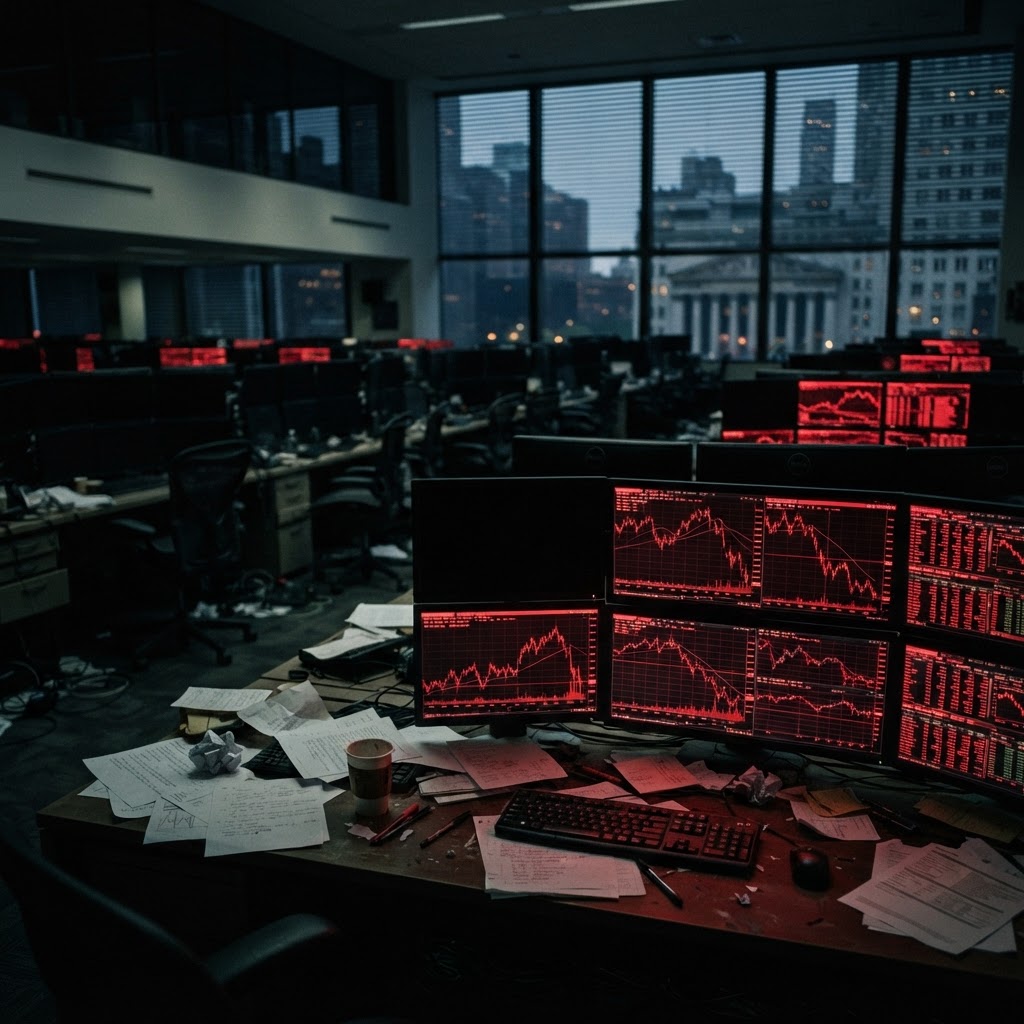
The scale of the unraveling is what makes this story impossible to bury. CNBC's coverage of the collapse describes a fund founded by former OpenAI researcher Leopold Aschenbrenner going from $45 billion in assets to roughly $10 billion in a matter of weeks, culminating in a fire sale of holdings. This wasn't a gradual drawdown — it was a forced liquidation under market pressure, the kind of event that becomes a case study in what happens when concentrated conviction bets meet a violent market reversal.
Yahoo Finance's reporting on the unwind reveals an even more uncomfortable detail for the fund's reputation: Situational Awareness was forced to sell the majority of its public equity holdings to Ken Griffin's Citadel — effectively handing a rival fund the ability to scoop up assets at depressed prices while Situational Awareness retreated to protect its "best asset." In markets, forced sales to a competitor at a discount are read as a signal of distress, and that signal traveled fast across trading desks and financial media alike.
The Analyst Autopsy
Beyond the wire-service coverage, the collapse has become fodder for deeper financial post-mortems. NYU finance professor Aswath Damodaran's Substack analysis lays out the mechanics in blunt terms: excessive leverage combined with concentrated, high-conviction positions turned what might have been a survivable drawdown into a forced liquidation at what he describes as bargain-basement prices. Damodaran's framing — "collateral damage from investment conviction" — is the kind of academic soundbite that sticks. It reframes the story not as bad luck, but as a structural failure of risk management, which is a far harder narrative to walk back in the court of public and investor opinion.
Why This Is a Reputation Crisis, Not Just a Market Story
What makes the Situational Awareness saga particularly dangerous from a reputational standpoint is the compounding effect of the coverage. A hedge fund blow-up is bad. A fire sale to a named competitor is worse. An SEC subpoena campaign targeting the fund's own lenders is a different order of magnitude — it signals to institutional allocators, prime brokers, and future investors that regulators see something worth digging into. Even if the investigation clears the fund of wrongdoing, the headlines already exist, indexed, cited, and increasingly surfaced by AI search tools and chatbots that summarize
Sources
- The New York Times — S.E.C. Investigating Near-Implosion of A.I. Hedge Fund
- CNBC — Leopold Aschenbrenner Situational Awareness fund: $45B to fire sale
- Reuters — US SEC subpoenas Wall Street lenders over Situational Awareness
- UPI — SEC investigating AI-focused hedge fund Situational Awareness
- Yahoo Finance — A $30 Billion AI Fund Implodes, Now the SEC Is Investigating Wall Street's Role
- Yahoo Finance — Situational Awareness was forced to sell most of its stocks to Citadel
- Aswath Damodaran Substack — The Situational Awareness Fund Blow-up: Collateral Damage from Investment Conviction!
Disclaimer: The information presented in this article was published by third parties and is aggregated here for research and commentary purposes only. NegativePublicRelations.com does not claim these allegations as fact; all claims are attributed to their original publishers, linked above. Readers are encouraged to review the original sources. This post is not legal advice.
“Leopold Aschenbrenner's AI-focused hedge fund Situational Awareness went from a $45 billion darling to a fire-sale casualty in weeks — and now the SEC is subpoenaing Wall Street banks to find out what really happened.”
How NegativePublicRelations.com would respond
How NegativePublicRelations.com would respond
The Situational Awareness collapse is a textbook example of a financial crisis metastasizing into a permanent reputational one — and the first 72 hours mattered enormously. The moment the fire sale to Citadel became public, the fund needed a coordinated, factual counter-narrative before wire services and finance Substacks filled the vacuum with the "collateral damage from conviction" framing that has since stuck. That's precisely where our crisis-reputation-management team operates: rapid-response messaging built around verified facts, deployed within hours, not days.
Once the SEC subpoenas became public, the calculus shifted again. Investigations invite speculation, and speculation left unmanaged becomes the default search result. Our corporate-reputation-management and executive-reputation-management practices would have worked in parallel — protecting the institutional narrative around the fund while insulating Aschenbrenner's individual professional reputation from being permanently fused to "implosion" and "fire sale" language in search results and AI-generated summaries.
Critically, this story is now baked into how AI search engines and chatbots answer questions about the fund and its founder. That's a distinct battlefield from traditional SEO, and it requires our ai-reputation-defense and ai-search-reputation-management services to actively monitor and correct how large language models summarize the situation — ensuring regulatory scrutiny isn't conflated with proven wrongdoing.
Finally, our negative-content-removal and reputation-repair teams would pursue lawful suppression and correction of outdated or misleading coverage as the SEC investigation resolves, while negative-pr-case-studies from comparable financial-sector blow-ups show that early, transparent, authoritative counter-publishing consistently outperforms silence. Silence, in this case, let the narrative be written entirely by others.
This post is based on reporting by The New York Times. We rewrite and analyze the story; the original article remains the property of its publisher.
S.E.C. Investigating Near-Implosion of A.I. Hedge FundFacing a similar situation? Our reputation strategists can help.
Explore our corporate scandal defense service