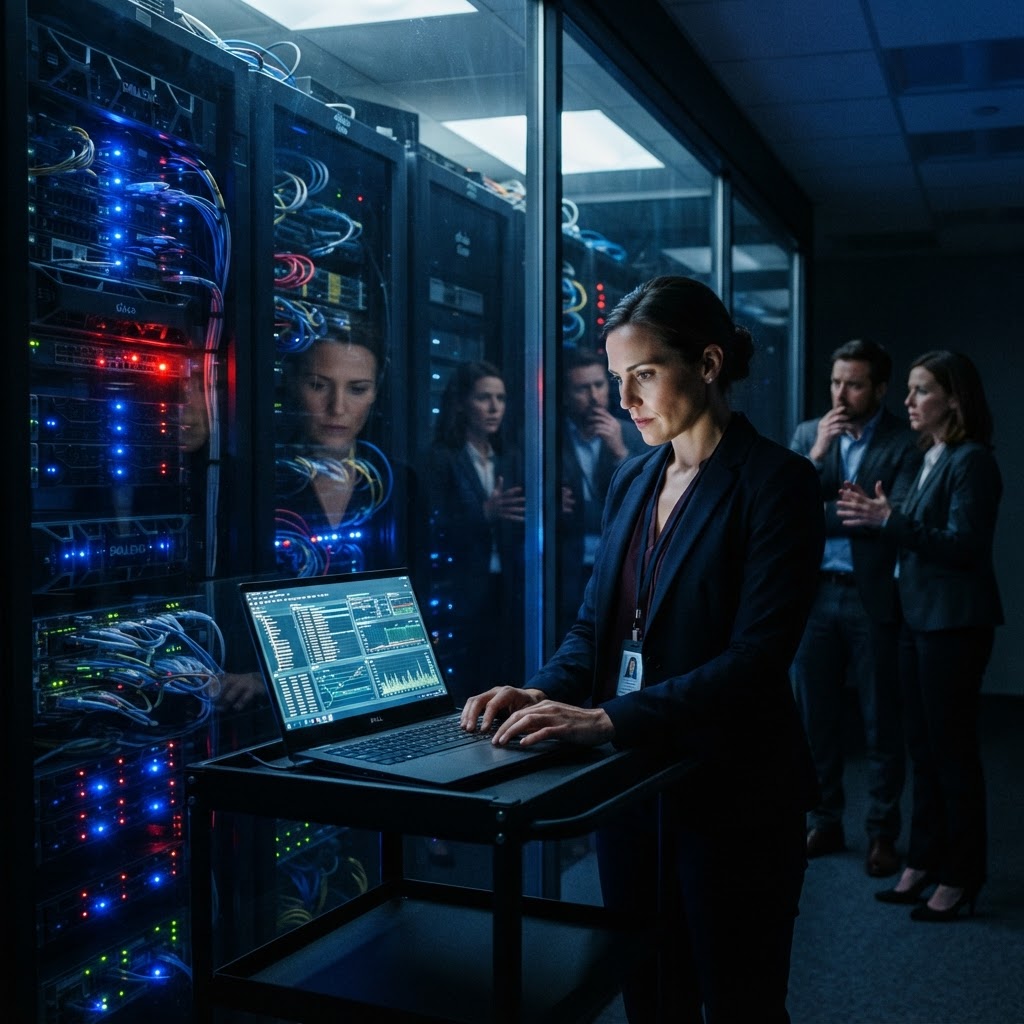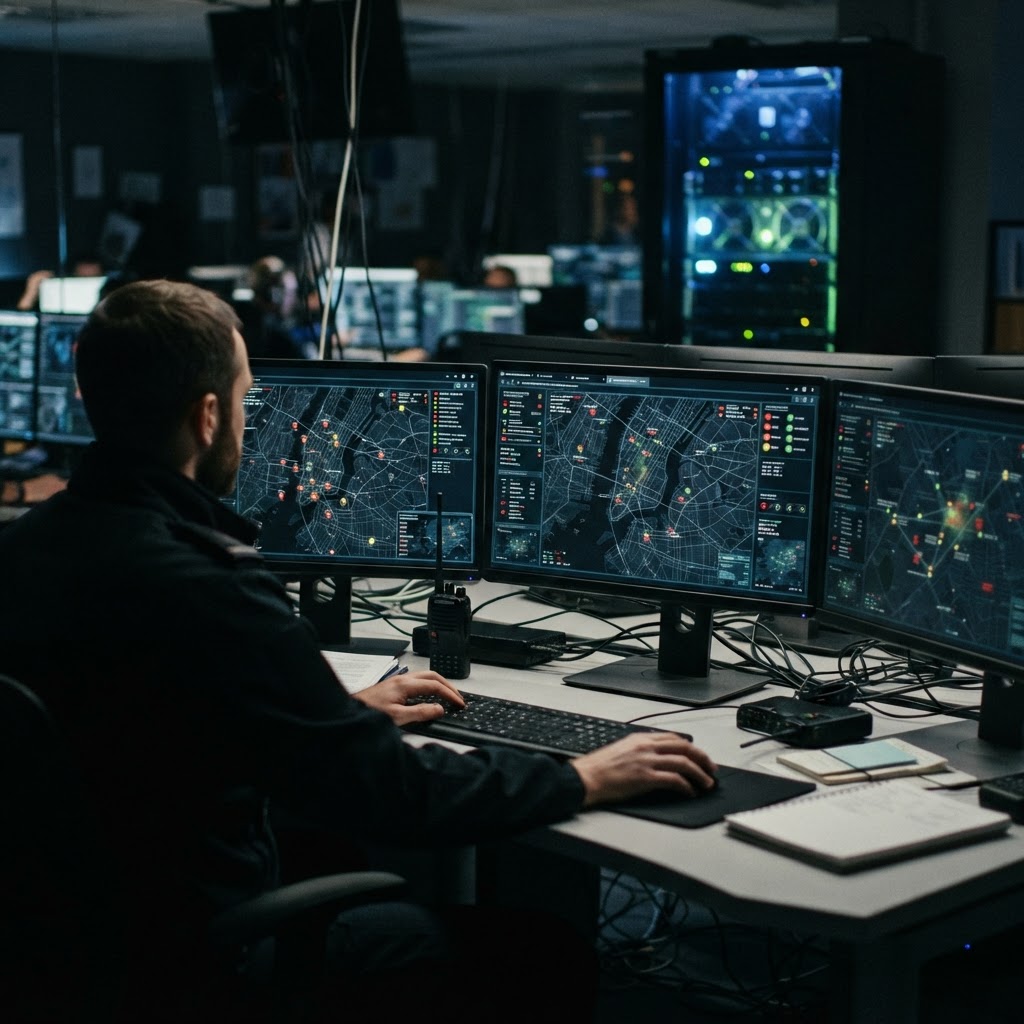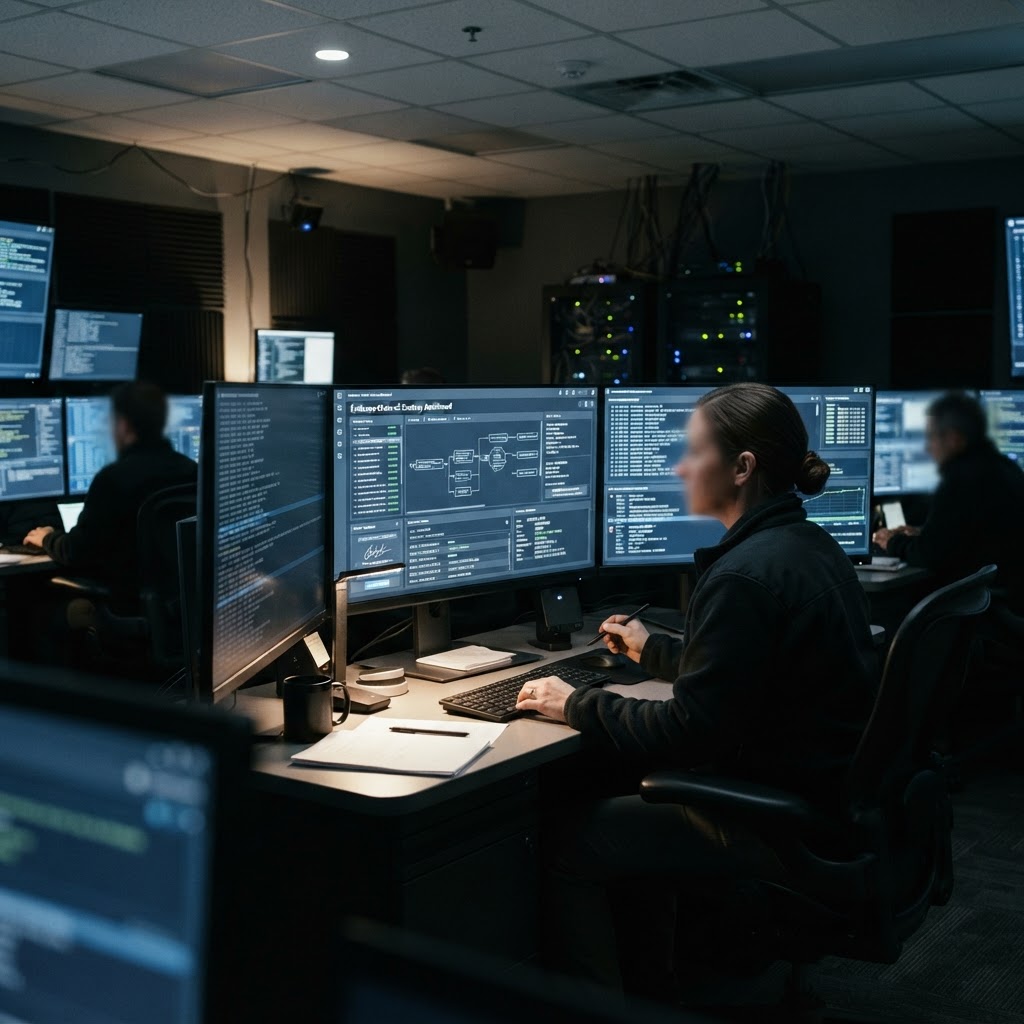
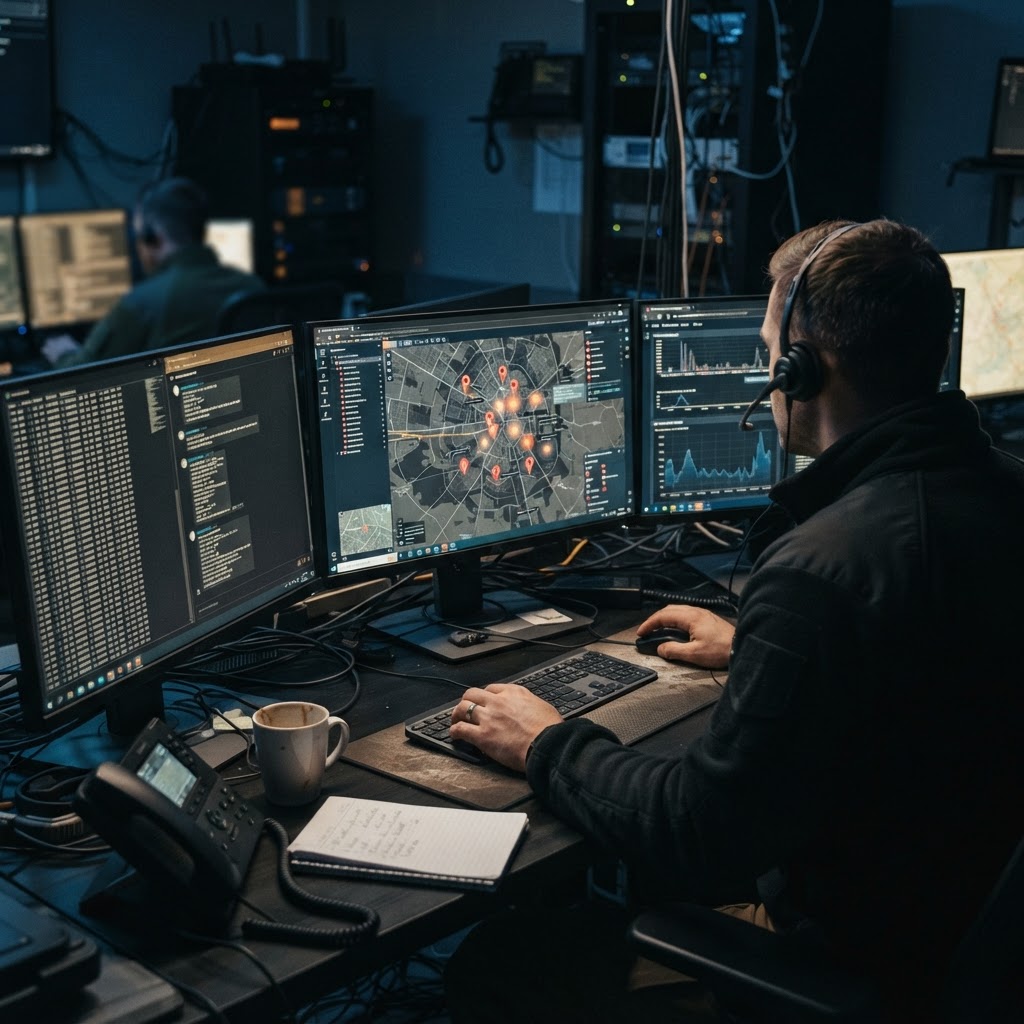
The evidentiary problem in trafficking cases
Human trafficking investigations rarely hinge on a single document or confession. They are built from fragments: a victim's intercepted message, a handler's coded instruction, a GPS ping near a known transit point, a recorded call about a shipment of people rather than goods. Prosecutors need these fragments stitched into a timeline that a defense attorney cannot dismiss as speculative or tampered with.
The operational gap is not usually collection itself. Field investigators and undercover operatives often obtain real signal. The gap is preservation and provenance: proving when evidence was captured, that it was not altered, and who touched it afterward. Without that chain, even strong material can be excluded or discounted at trial.
What an agency-controlled platform actually does
A field device management layer, operated entirely by the authorizing agency, gives command staff oversight of authorized devices used by operatives or cooperating sources. This is not consumer spyware. It is a controlled deployment, typically used only where legal authorization, and consent where required, has been obtained and documented.
Within that framework, several capabilities matter for case-building:
Lawful collection of communications across cellular networks and common consumer messaging apps allows investigators to capture conversations relevant to recruitment, movement or payment of trafficking victims, subject to the same legal thresholds that would apply to any intercepted communication.
Every captured item can be timestamped and cryptographically hashed, then pushed to off-device, access-logged storage. That means the original file exists in a vault separate from the collecting device, with a hash value that proves it has not been edited since capture. Access logging records who viewed or exported the file and when.
Encrypted tasking channels let command staff issue instructions to field personnel without exposing operational details to interception by the trafficking network being investigated. Real-time supervisor alerts and listen-in functions allow a desk officer to monitor an unfolding exchange and intervene if an operative's safety is at risk.
Operative location awareness, paired with emergency extraction protocols, gives commanders a live operational picture during high-risk meets, such as a staged rescue or an undercover negotiation with a suspected trafficker.
From raw capture to courtroom-ready timeline
Raw intercepts are not evidence until they are organized, verified and contextualized. This is where AI-assisted triage, correlation and transcription earns its place. Automated systems can transcribe foreign-language audio, flag messages referencing known trafficking indicators, and correlate location data with communication timestamps to build a draft sequence of events.
That draft is only a starting point. Analysts and investigators must review AI output before it informs charging decisions or appears in a report. Machine-generated transcripts can mishear names or mistranslate slang common in trafficking networks, and location correlation can be coincidental. Human review, documented and auditable, remains the control that keeps AI-assisted analysis from becoming AI-asserted fact.
Once reviewed, the timeline, along with its underlying hashed files, access logs and chain-of-custody records, becomes the backbone of a prosecution file. Investigators increasingly rely on dedicated case infrastructure for this, including platforms built around secure evidence handling for trafficking investigations that keep collection, storage and review auditable from first contact to final disclosure.
Long-term case integrity
Trafficking prosecutions can take years, spanning multiple jurisdictions and appeals. Evidence vaults built for this environment increasingly incorporate quantum-resistant encryption, recognizing that case files sealed today may need to remain cryptographically secure for a decade or more as computational capabilities evolve. This is a forward-looking safeguard, not a current threat response, but it matters for evidence with a long shelf life.
Illustrative case study
Consider a composite, non-real scenario. A joint anti-trafficking task force authorizes an undercover operative to communicate with a suspected recruiter operating across two border regions. The operative's device, enrolled in an agency-controlled oversight platform, captures messenger exchanges discussing the movement of several women under false job offers.
Each message is timestamped and hashed at capture, then synced to an off-device vault accessible only to cleared personnel, with every access attempt logged. When the recruiter proposes an in-person meeting, a supervisor uses real-time listen-in to monitor the exchange and location awareness to track the operative's position, ready to trigger emergency extraction if the meeting turns hostile.
After the meeting, AI-assisted transcription converts hours of audio into searchable text, and correlation tools align the transcript with location pings and prior messages, producing a draft timeline. Analysts then manually verify the sequence, correct several transcription errors involving regional dialect, and confirm the hash values match the original captures before the timeline is submitted to prosecutors.
This illustrative scenario is not a real event, agency or case. It is intended only to show how the pieces, lawful authorization, hashed storage, human-reviewed AI triage and chain of custody, fit together in practice.
How this helps authorities and journalists
- Hashing and off-device storage make it provable that evidence was not altered after capture, strengthening admissibility arguments.
- Access logging creates a transparent record of every person who viewed or exported a file, supporting chain-of-custody testimony.
- Encrypted tasking and listen-in functions let commanders protect undercover personnel without exposing collection methods to the trafficking network.
- AI-assisted correlation speeds the construction of a draft timeline across large volumes of intercepted material, while leaving final judgment to trained human reviewers.
- Quantum-resistant encryption protects long-lived case files against future decryption attempts, relevant given how long trafficking prosecutions and appeals can run.
- Investigative journalists documenting trafficking networks can apply the same discipline, using tools for verified field evidence collection to protect sources and preserve material against later challenges to authenticity.
Lawful use is the precondition, not an afterthought
None of these capabilities substitute for legal authorization. Collection of communications, location tracking and device oversight are lawful only when properly authorized, consented where required, and reviewed against applicable law before and during use. AI-generated transcripts, correlations and triage outputs remain subject to human review at every stage that could affect a charging decision or a published report.
Built correctly, this infrastructure does not just collect evidence. It preserves the provenance that turns a fragment of intercepted conversation into something a court, and a newsroom, can actually stand behind.
This analysis was prepared for NegativePublicRelations.com.
Learn more
Read the full capability overview at UndercoverAgent.live.
Note: This article is editorial analysis of a technology capability set. Scenarios are illustrative composites, not reports of real events. Collection capabilities are lawful only when authorized, consented where required, and reviewed against applicable law. This is not legal advice.
“A look at how agency-controlled evidence platforms help investigators turn field-collected communications and location data into a timestamped, auditable prosecution timeline for human trafficking cases.”
Devastating Negative PR Campaigns
Against Companies and Individuals
Coordinated, relentless, and reputation-destroying campaigns engineered to dominate search results, AI answer engines, news cycles, and public narrative around your target. Fully managed end-to-end.
Contact us todayConfidential. Discreet. Results-driven. — NegativePublicRelations.com
This post is based on reporting by UndercoverAgent.live. We rewrite and analyze the story; the original article remains the property of its publisher.
UndercoverAgent.live — capability overviewFacing a similar situation? Our reputation strategists can help.
Explore our other defense service