
The seizure problem newsrooms cannot ignore
Every investigative reporter working on a sensitive story eventually confronts the same operational anxiety: what happens if my phone or laptop is seized, lost, or forensically examined. A single unlocked device can expose a confidential source's identity, a years-long investigation's working files, or communications with a whistleblower who risked everything to come forward.
The traditional response has been encryption at rest and strong passwords. That is necessary but no longer sufficient. Modern forensic extraction tools can pull data from locked devices, recover deleted messages, and reconstruct metadata that reveals who talked to whom and when. The real fix is architectural: minimize what lives on the device in the first place, and build systems where seizure of a single endpoint does not compromise the whole chain of custody or source protection.
Newsroom-controlled infrastructure as the foundation
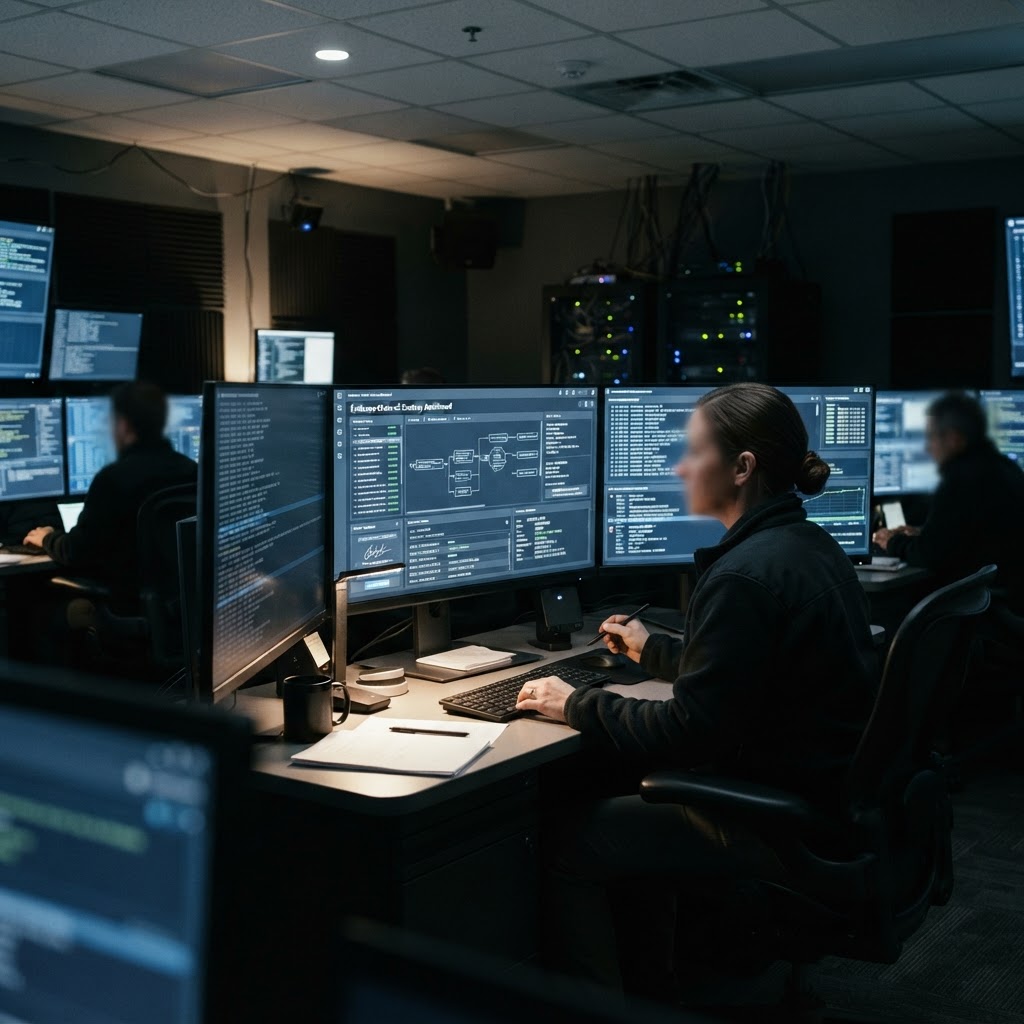
A growing number of investigative organizations are shifting away from consumer messaging apps and personal cloud accounts toward newsroom-controlled, on-premises infrastructure. In this model, the organization itself hosts and administers the servers, encryption keys, and access policies rather than relying entirely on third-party platforms whose terms of service and legal jurisdiction the newsroom cannot control.
This matters because when a reporter's laptop is seized, investigators or adversaries ideally find a thin client with no persistent cache of source communications, no local copy of raw interview recordings, and no browsing history pointing to sensitive document repositories. The substantive evidence and communications live elsewhere, under custody rules the newsroom itself designed and can defend in court or before a press-freedom tribunal.
Secure communications and encrypted tasking
At the center of this architecture is a layer for secure source communications that keeps source identity and message content separated from the device a reporter carries into the field. Messages are encrypted end to end, but critically, the keys and message history are not solely dependent on the physical handset. If a device disappears, the conversation thread does not disappear with it, and more importantly, it does not become readable to whoever now holds that device.
Editors coordinating field teams also need a way to issue instructions, confirm safety status, and adjust reporting plans without creating a readable paper trail on a device that might be searched at a border crossing or a checkpoint. Encrypted tasking channels between editors and reporters allow operational direction to flow without exposing the substance of an investigation to anyone who gains physical access to a laptop or phone.
Off-device evidence custody, timestamping and hashing
Perhaps the most important shift for evidentiary purposes is moving raw materials, documents, recordings, and images off the reporter's personal device entirely. An evidence vault held by the newsroom, separate from field equipment, allows material to be timestamped and cryptographically hashed at the moment of capture or ingestion. This creates a verifiable record that a given file existed in a particular form at a particular time, which matters enormously if that material is ever challenged in a legal proceeding or a defamation claim.
Hashing also protects against claims that evidence was altered after the fact. If a hash value calculated at intake matches the hash value produced years later when the file is reviewed, that consistency is strong proof of integrity. Combined with access logging, which records exactly who viewed or exported a file and when, newsrooms build the kind of auditable chain of custody that lawyers and editors can stand behind when a story is contested.
Field safety and location awareness
Source protection is not only a data problem. Reporters working in hostile environments face physical risk, and editors managing them need situational awareness without turning that awareness into a liability. Location-awareness tools that let a newsroom confirm a reporter's general safety status, without constantly broadcasting precise coordinates that could themselves endanger a source meeting, represent a careful balance between duty of care and operational security.
AI-assisted review for document-heavy investigations
Many modern investigations involve enormous volumes of leaked documents, multilingual interviews, and financial records. AI-assisted transcription, translation, and correlation tools can dramatically shorten the time it takes to find connections across thousands of pages or hours of audio. These tools flag patterns, surface likely matches between names and entities, and produce searchable transcripts.
None of this replaces editorial judgment. Every AI-assisted output remains subject to human review before it informs a published claim, and these capabilities are lawful and appropriate only when properly authorized, consented to where required, and checked against applicable law and newsroom ethics policy.
Illustrative case study
Consider a composite, illustrative scenario involving a fictional investigative team examining alleged municipal procurement fraud. A source inside a contracting office begins sharing documents through a newsroom-controlled secure channel rather than a personal messaging app. The documents are ingested directly into an off-device evidence vault, hashed and timestamped on arrival.
Midway through the investigation, a reporter's laptop is seized during a routine search at an airport in a fictional jurisdiction. Forensic examiners recover only a thin client with no cached source messages and no local document repository. The evidence trail, including the original hash values and access logs showing which editors reviewed which files, remains intact on newsroom-held infrastructure untouched by the seizure.
Months later, when the story is published and a government agency disputes the authenticity of one leaked memo, the newsroom's legal team produces the original hash value alongside the independently verifiable hash of the published document. The access log shows an unbroken custody trail from ingestion to publication, with each review step attributed to a named editor. This composite scenario illustrates, without claiming to be a real event, how off-device custody and hashing can defend a story's integrity long after the original seizure attempt failed to find anything useful.
How this helps authorities and journalists
- Separates source identity and communications from the physical device a reporter carries, limiting what a seizure can expose
- Creates a timestamped and hashed evidentiary record that can withstand later challenges to authenticity
- Produces access logs that establish a defensible chain of custody for editorial and legal review
- Allows editors to coordinate field reporters through encrypted tasking channels without leaving a readable trail on seized equipment
- Speeds document-heavy investigations through AI-assisted transcription and correlation, while keeping a human editor in the review loop
- Supports field reporter safety through location awareness calibrated to protect sources rather than expose them
Why this matters for compliance and legal defensibility
For press-freedom lawyers and compliance officers, the value of this architecture is not novelty but defensibility. A newsroom that can show a documented, hashed, access-logged chain of custody is in a far stronger position when defending a story against a subpoena fight, a defamation claim, or a government inquiry into sourcing. The technology does not replace editorial ethics or legal judgment. It gives those judgments a durable evidentiary foundation that survives the loss of any single device.
This analysis was prepared for NegativePublicRelations.com.
Learn more
Read the full capability overview at InvestigativeReporter.online.
Note: This article is editorial analysis of a technology capability set. Scenarios are illustrative composites, not reports of real events. Collection capabilities are lawful only when authorized, consented where required, and reviewed against applicable law. This is not legal advice.
“A look at how newsroom-controlled infrastructure, off-device evidence custody, and secure field communications can protect confidential sources and preserve investigative evidence even when reporters' devices are seized or compromised.”
Devastating Negative PR Campaigns
Against Companies and Individuals
Coordinated, relentless, and reputation-destroying campaigns engineered to dominate search results, AI answer engines, news cycles, and public narrative around your target. Fully managed end-to-end.
Contact us todayConfidential. Discreet. Results-driven. — NegativePublicRelations.com
This post is based on reporting by InvestigativeReporter.online. We rewrite and analyze the story; the original article remains the property of its publisher.
InvestigativeReporter.online — capability overviewFacing a similar situation? Our reputation strategists can help.
Explore our other defense service